
The art of creating delicious dishes at home begins with a fundamental understanding of heat, ingredients, and time. Furthermore, mastering essential cooking techniques will dramatically transform the way you create in the kitchen. Many people think complex recipes are the ultimate secret to high-class dishes, but in fact, proper control of basic culinary techniques is the main determinant of flavor, texture, and nutritional content.
Understanding how heat interacts with food helps you cook without hesitation. Therefore, when you master temperature and humidity control, any simple ingredient can turn into an extraordinary dish. This cooking methods guide will help you understand the core practices that every home cook should master.
Foundations of Kitchen Science and the Impact of Heat on Food
Cooking is essentially a process of physical and chemical transformation triggered by heat energy. Consequently, when food ingredients absorb heat, changes in molecular structure occur to create new aromas and flavors.
For instance, one of the most important phenomena in the culinary world is the Maillard reaction. This chemical reaction between amino acids and reducing sugars occurs when the surface of food meets high dry heat above 140 degrees Celsius. The browning effect from this reaction provides a rich savory flavor to roasted meats, bread, and vegetables. Similarly, caramelization occurs in the natural sugars of ingredients under continuous heat, creating a soft and complex sweetness.
Dry Heat Methods for Savory Flavor and Crispy Texture
Dry heat techniques rely on hot air, oil, or direct contact with a hot pan surface without using water.
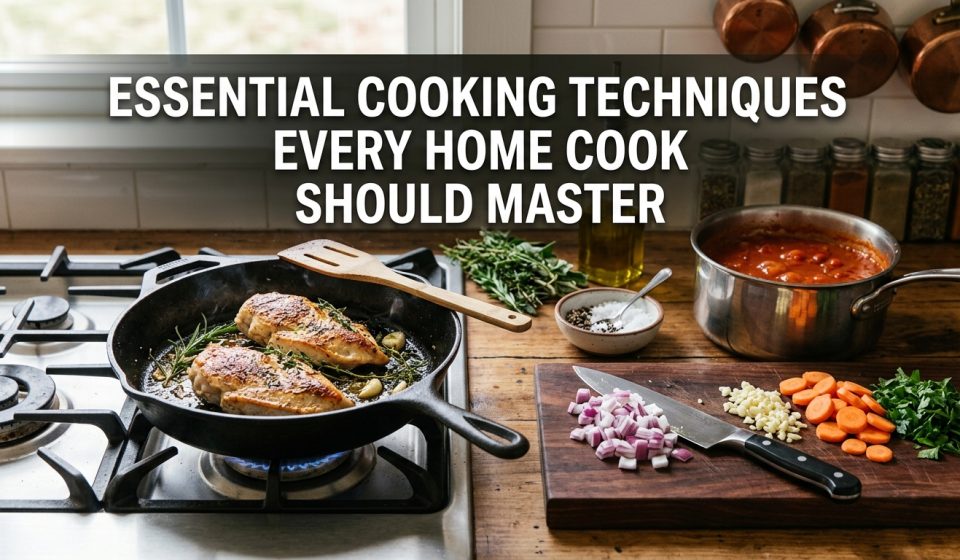
Sautéing and Pan Searing Techniques for Perfect Results
Sautéing is a fast cooking technique using a small amount of oil at a high pan temperature. The word comes from French meaning “to jump,” describing how cooks toss small-cut ingredients quickly in the pan.
- Utilize a pan with a thick base for consistent heat distribution.
- Ensure the pan gets truly hot before adding oil and ingredients.
- Refrain from crowding the pan to maintain a consistent temperature.
- Slice ingredients into consistent sizes for uniform cooking.
Meanwhile, pan-searing focuses on forming a crispy outer layer on thick cuts of meat. High heat locks in natural moisture inside the meat, so it remains juicy and tender throughout.
Roasting Methods to Maximize Natural Sweetness
Roasting uses hot air distributed inside an oven to cook food ingredients slowly. In addition, this method works ideally for large cuts of meat, whole chicken, and root vegetables like potatoes and carrots.
High temperatures inside the oven trigger the caramelization of natural sugars in vegetables. As a result, this process makes the original taste of the vegetables much sweeter and richer. However, you must provide space between ingredients on the baking sheet so hot air circulates properly without creating steam that softens the texture.
Moist Heat Methods to Preserve Nutrition and Soften Food
Unlike dry heat, moist heat techniques rely on liquid media such as water, broth, or steam to cook food.
Simmering and Braising for Tender Meat Textures
Simmering works by cooking ingredients in hot liquid at a temperature slightly below the boiling point, around 85 to 95 degrees Celsius. Water bubbles will appear slowly on the surface. Therefore, this technique serves as a perfect choice for making soups, broths, and cooking sauces without damaging delicate ingredients.
On the other hand, braising combines two stages of cooking. Cooks first brown tough-textured meats using a searing technique, and then cook them slowly in a closed liquid at a low temperature. Consequently, this long process breaks down connective tissue in the meat, making the texture tender and deeply infused with flavor.
Steaming as a Healthy Cooking Technique
Steaming utilizes boiling water vapor to cook food without direct contact with the liquid. Therefore, culinary experts widely recognize this method as one of the best healthy cooking techniques available.
Because food avoids submersion in water, it retains water-soluble vitamins like vitamins C and B complex effectively. In addition, the natural color of vegetables remains bright and the texture stays crisp.
Knife Skills and Prep as the First Step
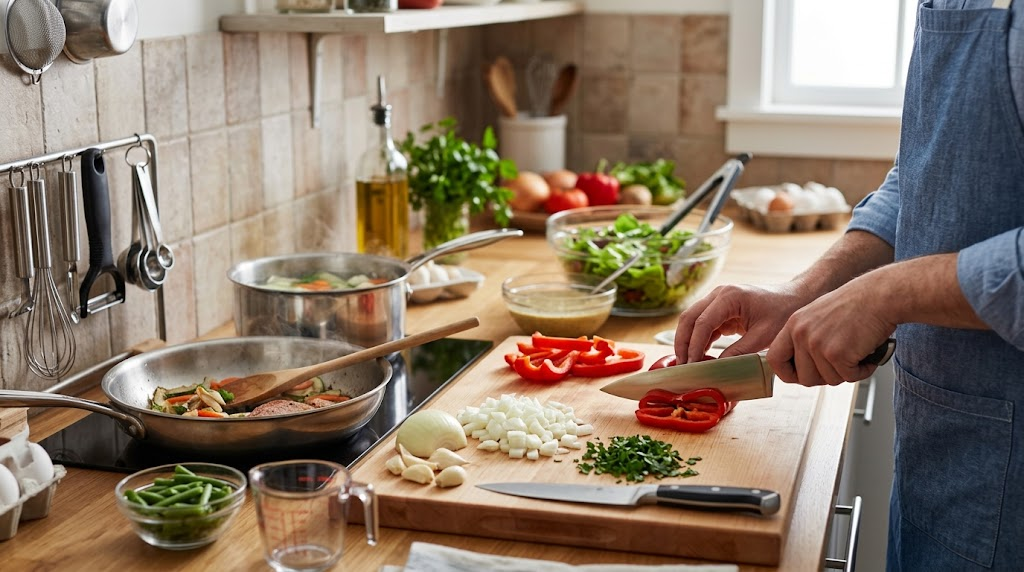
Before applying various cooking techniques on the stove, mastering knife skills provides an essential foundation that you cannot ignore. The ability to cut ingredients with consistent size and thickness significantly affects your final cooking result.
Specifically, ingredients with uniform cuts will cook at the same rate. If cut sizes vary greatly, some pieces will overcook while other parts remain raw. Furthermore, organized ingredient preparation (mise en place) makes the entire cooking process run smoothly and systematically.
Concrete Steps to Sharpen Your Culinary Intuition
Mastering culinary skills does not require fancy equipment or expensive ingredients. Instead, the main key lies in consistent practice and an understanding of how ingredients react to heat. By practicing heat control and choosing the right cooking method, you can serve healthy dishes rich in flavor for your family every day. Try applying one of these new techniques in your kitchen tonight and enjoy the difference.
Kitchen Secrets: A Deep Dive into Home Culinary Techniques
What is the key distinction between simmering and boiling?
Boiling occurs at the full boiling point of water (100 degrees Celsius) with vigorous bubbles. In contrast, simmering occurs at a lower temperature between 85 to 95 degrees Celsius with gentle bubbles, maintaining ingredient texture so pieces do not break apart.
Why should a pan be preheated before sautéing?
Preheating the pan before adding oil and ingredients prevents food from sticking to the surface. Furthermore, the correct pan temperature ensures the Maillard reaction proceeds quickly so the food does not absorb excess oil.
Is steaming always better than boiling vegetables?
Yes, steaming is generally better for preserving vegetable nutrients. The boiling process can leach valuable vitamins into the cooking water, whereas steaming keeps vitamins and minerals inside the vegetable tissue.
What is the function of the resting process for meat after pan searing or roasting?
Allowing meat to rest for a few minutes after cooking lets the internal juices redistribute throughout the fibers. If you cut the meat immediately while it is piping hot, the juices will run out and leave the meat dry.
How to prevent roasted vegetables from becoming soggy?
First, ensure you dry vegetables thoroughly after washing before tossing them in oil. Additionally, leave enough space between vegetable pieces on the baking sheet so the heat roasts them dry rather than steaming them.