
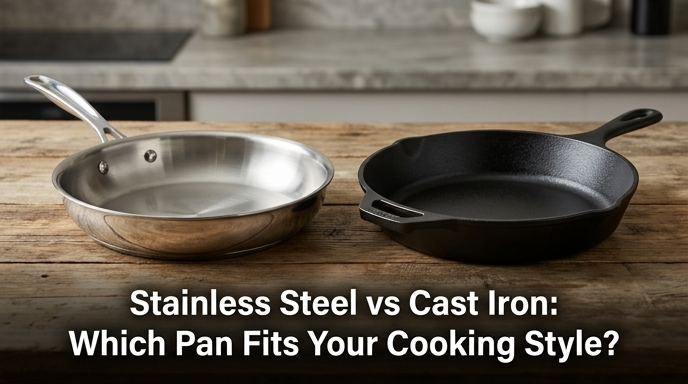

Every home cook eventually faces the ultimate cookware dilemma when upgrading their kitchen arsenal. You want to sear a thick steak perfectly, but you also need to simmer a delicate tomato sauce without ruining your pan. Choosing between stainless steel vs cast iron is not just about the initial price tag. It is about matching the right tool to your specific culinary habits and lifestyle.
Many beginners assume one skillet can handle every recipe, leading to burnt meals, uneven cooking, or ruined cookware surfaces. However, understanding the unique thermal properties and maintenance needs of each material changes how you approach recipes. This comprehensive guide breaks down exactly when to use each pan, helping you make a confident, informed decision for your daily cooking routine.
The Core Differences in Heat Retention and Distribution
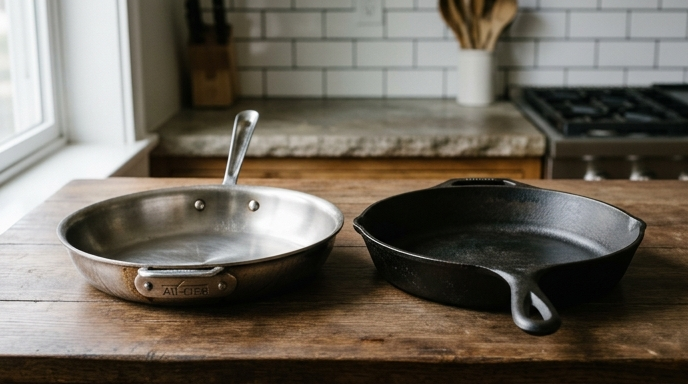
Thermal performance dictates exactly how food cooks once it hits the hot pan. Cast iron is incredibly dense and heavy. This density means it takes much longer to heat up on the stovetop. However, once it gets hot, it stays exceptionally hot. This excellent heat retention makes it the perfect vessel for achieving a deep, crusty sear on thick meats.
On the other hand, stainless steel pans typically feature an aluminum or copper core sandwiched between thin steel layers. This multi-clad construction allows the pan to heat up very rapidly. It also distributes the thermal energy evenly across the entire cooking surface, eliminating frustrating hot spots. While it cannot hold heat quite like heavy iron, it offers precise temperature control. When you turn down the burner, the steel responds almost immediately. This rapid response prevents delicate ingredients from overcooking or scorching.
Best Culinary Uses for Each Skillet
You will get the best results by assigning specific cooking tasks to each pan type. Neither material is inherently better overall; they just excel at completely different culinary techniques.
-
When to Reach for Cast Iron
Grab your heavy skillet when you need high, sustained temperatures. It is the absolute champion for searing thick ribeye steaks, smashing burgers, or frying crispy chicken. Because it can go directly from the stovetop into a blazing hot oven, it is also ideal for baking cornbread or deep-dish pizzas. Over time, building up the seasoning process creates a naturally non-stick surface. This allows you to cook with less oil while adding a subtle depth of flavor to your savory dishes.
-
When Stainless Steel Excels
Reach for this shiny pan when preparing delicate proteins or complex, vibrant sauces. It is the undisputed king of fond—the delicious browned bits left at the bottom of the pan after searing chicken or pork. Because the metal is non-reactive, it is perfectly safe for cooking acidic foods like tomatoes, wine, or lemon juice. You can easily deglaze the hot pan to create a rich pan sauce without stripping away any seasoning or tasting metallic flavors. It is also the preferred choice for sautéing vegetables quickly and evenly.
Cleaning and Daily Maintenance Needs
The way you wash your cookware significantly impacts its lifespan and daily performance. Cast iron requires a specific, consistent routine to prevent rust and maintain its slick coating. You should avoid soaking it in soapy water for extended periods. Instead, gently scrub off leftover food debris with a stiff brush and warm water. Afterward, you must dry it completely on a warm stove and rub a light layer of oil into the surface to protect it.
Stainless steel requires far less pampering for its daily maintenance. It will not rust if left soaking in the sink, and it does not need any oiling after washing. You can scrub it vigorously with soap and a steel wool pad to remove stubborn, burned stains. While most brands claim they are dishwasher safe, hand washing is usually recommended to maintain the polished finish. If discoloration occurs, a simple wash with baking soda or specialized cleaning powder brings back the original shine effortlessly.
|
Feature |
Stainless Steel |
Cast Iron |
|
Heat Control |
Highly responsive and fast |
Slow heating but high retention |
|
Daily Maintenance |
Wash with soap, no oiling |
Dry immediately, requires oiling |
|
Cooking Acidic Foods |
Safe and non-reactive |
Not recommended |
|
Weight |
Light to moderate |
Very heavy |
Frequently Asked Questions About Kitchen Pans
Can I use stainless steel vs cast iron for cooking eggs?
You can use both, but a well-seasoned iron skillet offers a much better non-stick surface for eggs. Cooking delicate eggs on bare steel requires precise temperature control and plenty of butter or oil to prevent severe sticking. Many chefs prefer iron for their morning scrambles because the slick patina releases food smoothly and quickly.
Which pan is more durable in the long run?
Both materials are incredibly durable and can easily last for generations of daily use. Heavy iron is virtually indestructible, though it can crack if dropped hard or shocked with cold water while hot. Steel pans are resistant to rust, warping, and cracking, making them slightly more forgiving for casual, everyday kitchen abuse.
Making Your Final Kitchen Choice
Ultimately, choosing between stainless steel vs cast iron depends entirely on your daily meal preferences. If you frequently cook acidic sauces, delicate fish fillets, or prefer a low-maintenance cleanup routine, the multi-clad steel pan is your best investment. Conversely, if you love searing thick cuts of meat, baking rustic breads, and do not mind a short daily maintenance routine, the heavy iron skillet will serve you perfectly. Serious home cooks usually keep at least one of each in their cabinets to handle any culinary challenge.